Arizona startup funding has been gaining serious ground, carving out a distinct place for the region within the national landscape. If you’re navigating the Phoenix tech ecosystem as a founder, talent, or an investor, this overview will walk you through how the Arizona startup funding stack works - starting from early-stage grants all the way to later-stage capital injections. At Freeway, I want to share what I’ve seen first-hand as our community shapes an approach that makes entry points clearer and partnerships more accessible across Arizona.
Not long ago, founders here relied mostly on out-of-state networks for growth capital. In recent years, though, Arizona startup funding has shifted drastically. By 2023, non-debt VC and equity financing deals in Arizona jumped an impressive 58%, now totaling $1.7 billion in a single year according to the Arizona Technology Council. Across software, health, cleantech, and internet services, over $7.7 billion has come into Arizona since 2018. This evolution isn’t just about dollars flowing in. You’ll notice that Arizona’s approach to startup funding relies more on strategic connectivity - stacking state grants, angel funding, venture capital, and corporate partnerships, so there’s an actual on-ramp for founders in every stage.
What feels different on the ground is that these layers reinforce each other. Angel activity picks up where grants leave off, and the VC crowd is far more accessible than in bigger markets. For both first-time founders and seasoned operators, the Phoenix startup ecosystem increasingly stands out for these bridges - not just the capital.
If you’re new to fundraising here, my advice is always to start with grants and early-stage programs. Arizona stands out for how these initiatives can validate young companies and attract outside capital all at once. With options like the Arizona Venture Co-Invest Program (AVC Ignite) run by the Arizona Commerce Authority, founders gain access to seed capital co-invested alongside reputable angel groups and institutional partners. This means that getting a grant isn’t just about funding - it is a real stamp of confidence that often makes later VC conversations much easier.
I see most founders who move quickly here tap these grants for their first real push, particularly with Phoenix startup grants creating early traction to attract follow-on interest.
The next phase is that crucial angel layer. In Arizona, active networks like Arizona Tech Investors (ATI) are especially welcoming to founders aiming for their second or third round. Most local angels come with entrepreneurial backgrounds, and they’re as likely to offer introductions and advice as a check. Some, like the PHX East Valley Angel Investor Initiative, go beyond central Phoenix to champion early-growth companies across the broader metro area. This means more diversity of input and wider reach for your startup pitch.
If you want to make the most of these networks, I recommend reading our guide to approaching Arizona angel investors - we lay out practical steps for lining up those first meetings without getting lost in a maze of introductions.
After you build some traction, the next natural stop is Phoenix venture capital. Firms like PHX Ventures, Social Leverage, and Arizona Founders Fund are actively sourcing deals in SaaS, fintech, healthtech, and beyond. Our VC environment is still small compared to the coasts, but I find most investors here more open to first meetings, and far less exclusive than people expect. Since 2021, VCs have funneled almost $6 billion into Arizona startups, supported by both local leaders and newcomers from outside the region, according to Greater Phoenix Economic Council.
I’d suggest a “local first, national next” approach to fundraising. Build real relationships inside the Phoenix venture capital sphere first, then bring that credibility into wider national or global discussions. I wrote about this journey in our Fundraising in Phoenix playbook if you want actionable next steps.
One trend I’m seeing more often is large-scale corporate or strategic investment, even in early-stage deals. Solestial, a Phoenix-based solar company, is a great example - recently landing $60 million in Series B from Breakthrough Energy Ventures. The value here isn’t just the money. With corporates presenting local companies with big distribution and new customer bases, Arizona’s startup stack grows more interconnected each year. Corporate investors no longer just observe - they get involved by driving pilot programs or opening supply chains to growth-stage teams.
For practical advice on bridging the gap between investing and securing major customers, see our partnership playbook.
So, how do you put these pieces together? Arizona’s strength is in the way state programs, angel groups, VCs, and corporates work as a scaffold - each layer propping up the one before. Freeway’s role has always been about curating this infrastructure, not leaving founders to piece it together alone. We built the Freeway Dashboard to serve as a living map - helping you spot investors, discover grant programs, and explore who’s growing within our community.
The most important shift? A more intentional approach to ecosystem design, which I wrote about in this LinkedIn post on venture GDP and the power of coordination.
It’s natural to compare Phoenix and Arizona to markets like Austin or San Diego. What comes up for our community - every time - is that here, accessibility and relationship-building come first. Our stack doesn’t force founders into “winner takes all” scenarios. With lower costs, proximity to decision-makers, and an intentional ecosystem design, founders using the Arizona startup funding stack can build regional traction and leap into national markets without the noise or friction common elsewhere.
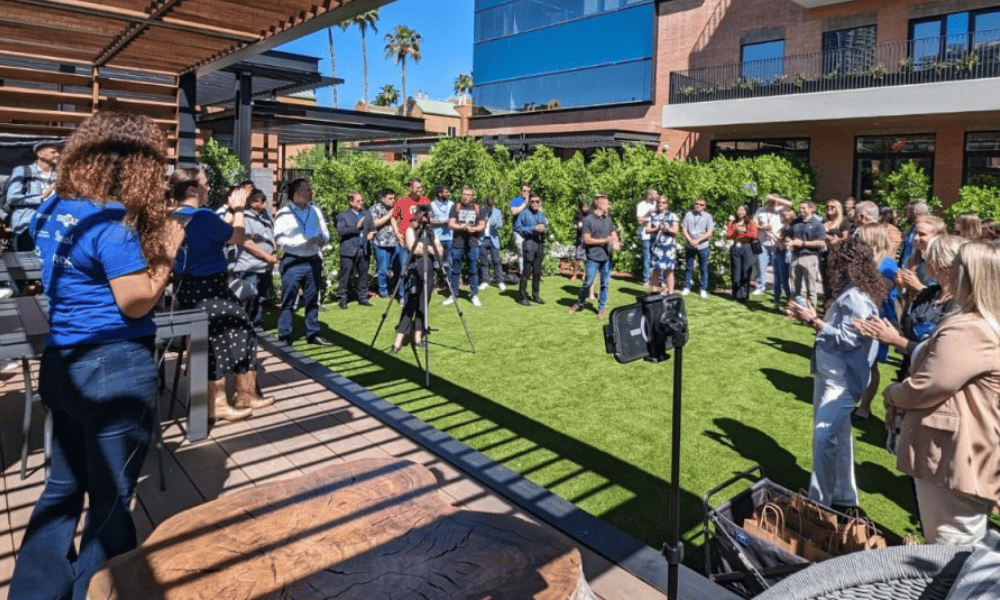
The Arizona startup funding stack keeps evolving - what doesn’t change is the community-first mindset that underpins it. Using platforms like Freeway and staying plugged into our ecosystem’s real connections, you’ll see that talent and capital move together here. Whether you’re just stepping in, seeking your first fundraise, or scaling out globally, you’ll find a seat in Arizona’s collaborative tech community. Where talent meets capital and community - your next step is here.




































.png)


.png)
.png)



Where talent meets capital and community































.png)