Phoenix tech clusters are changing the kinds of conversations you can have in Arizona. If you have been here a while, you’ve watched the story shift from “nice place to live” to “serious place to build.” You can see it in hiring plans, lease decisions, supplier expansion, and the number of founders who are choosing to stay close to customers instead of chasing a zip code.
I’m the found and operator of Freeway. From where I sit, the most helpful way to understand the Silicon Desert idea is this: it is not one big tech scene. It is a set of connected pockets of momentum. Semiconductors pull in advanced manufacturing and security. Autonomous vehicles pull in mapping, data, and fleet operations. HealthTech pulls in product, compliance, and clinical partners. When those things overlap, you stop relying on vibes and start building something that lasts.
This post is meant to give you signal. You’ll get a clear view of what’s forming, where it’s happening, and how you can plug in without wasting your calendar on low-value networking.
Clusters don’t appear because people say a city is “up and coming.” They form when Talent, Capital & Community move together. In Phoenix, you’re seeing that alignment more often:
And the real advantage is the way these clusters feed each other. When chip manufacturing scales, it creates demand for automation, materials, industrial software, cybersecurity, facilities, and logistics. When AV operations expand, it creates demand for safety tooling, mapping workflows, and field ops talent. This is how a region becomes durable.
If you want the cleanest explanation for why the valley feels different right now, start with semiconductors. Arizona State University’s Enterprise Technology team tracks the region’s momentum, including over $100 billion in announced semiconductor investment and the growing company base around it. You can read their breakdown in their overview of how Phoenix became an innovation hub.
Most people think “chips” and imagine one or two big names. The more practical story is density. Once a major fab build is underway, you see a long tail of specialized needs: tooling, materials, cleanroom services, compliance, controls, scheduling, maintenance, and security. BMS Commercial Services has a straightforward snapshot of why so many companies are choosing Phoenix, including the depth of the local semiconductor footprint, in their overview on tech giants flocking to Phoenix.
If you’re deciding where your company fits, don’t box yourself into “we’re not a semiconductor company.” Look at the adjacency map. In this cluster, demand keeps showing up for:
Phoenix earned credibility in autonomous vehicles because the environment makes it easier to run real-world programs: weather, road layouts, and a regulatory posture that has supported experimentation. But here’s the part that matters if you’re building a company: AVs don’t stay alive on demos. They live or die on operations.
When driverless services run day after day, you need safety processes, fleet support, mapping updates, incident response, customer experience workflows, and a whole set of behind-the-scenes roles that don’t look like “robotics” on a resume. The result is a talent market that includes ML and robotics, yes, but also field operations, QA, training, and tooling.
If your product touches mobility, logistics, sensor analytics, mapping, or safety operations, Phoenix can be more than a pilot city. It can be a place where you learn fast because the work is happening in the open.
HealthTech in Arizona does not always get the same headlines as chips or AVs, but the ingredients are here: major health systems, clinical partners, and a growing willingness to modernize workflows. If you’re building software in healthcare, being close to real operators matters. It shortens your feedback loop.
ASU’s research and commercialization engine also helps, because it strengthens the pipeline from lab work to applied products, and it builds talent that can think across engineering, product, data, and regulatory constraints. If you’re working in care navigation, revenue cycle, patient engagement, clinical AI support, or provider workflow tools, Phoenix can be a practical place to build and validate.
Every region that lasts has a strong horizontal layer: software and services that support multiple industries. In the Phoenix tech ecosystem, that includes established companies and a growing set of startups applying AI to specific, expensive problems.
When you hear people say Phoenix is becoming an AI hub, I’d encourage you to translate that into something more concrete. A lot of AI activity here is applied, not flashy. It’s tied to industries with urgency and budgets: manufacturing, logistics, security, healthcare, and finance.
If you want a quick way to see how the Phoenix startup ecosystem is actually organized across sectors, investors, programs, and companies, use the Freeway Dashboard. We built it because access is not broken in Phoenix. It is just hard to see when information is scattered.
Phoenix is spread out, so you’ll hear the “sprawl” critique. The truth is simpler: different cities and corridors play different roles. Manufacturing and large-scale industrial growth tend to concentrate where power, land, and logistics make sense. Startups and software teams often cluster around universities, downtown nodes, and employer centers.
If you’re building partnerships, hiring locally, or choosing an office footprint, it helps to think in nodes, not in a single “tech district.” Site Selection Magazine lays out how places like Chandler and Scottsdale fit into the state’s innovation corridors, including semiconductor expansion and broader tech growth, in their regional overview of Arizona tech.
We have talent. We have institutions producing more of it. The friction I see most often is visibility.
You can be a strong founder and still struggle to find the right operator community. You can be a hiring leader and still miss great candidates because they do not know which companies are worth their time. You can be an investor flying in and still leave thinking “nothing is happening” because the signal is distributed across too many rooms.
This is why Freeway exists. We focus on community infrastructure, not one-off moments. If you want a grounded starting point for navigating resources across coworking, incubators, and ecosystem support, I keep an updated guide here: Startup resources in Phoenix: the don’t-miss list for founders.
And if you want the deeper philosophy behind why coordination and intentional design matter, read my perspective in this post on increasing Arizona’s venture GDP. The short version is that ecosystem growth is a team sport, and the work is mostly about reducing friction so more people can participate.
I’m bullish on the Silicon Desert, and I’m not interested in pretending everything is solved.
What keeps the momentum credible is the scale and duration of what’s already in motion, especially in semiconductors, plus the growing set of adjacent companies that are choosing to build here for the long haul.
If you want to participate in Phoenix tech clusters, your best move is to be intentional and repeatable. The magic is not in “going to events.” It’s in building Trusted Community over time.
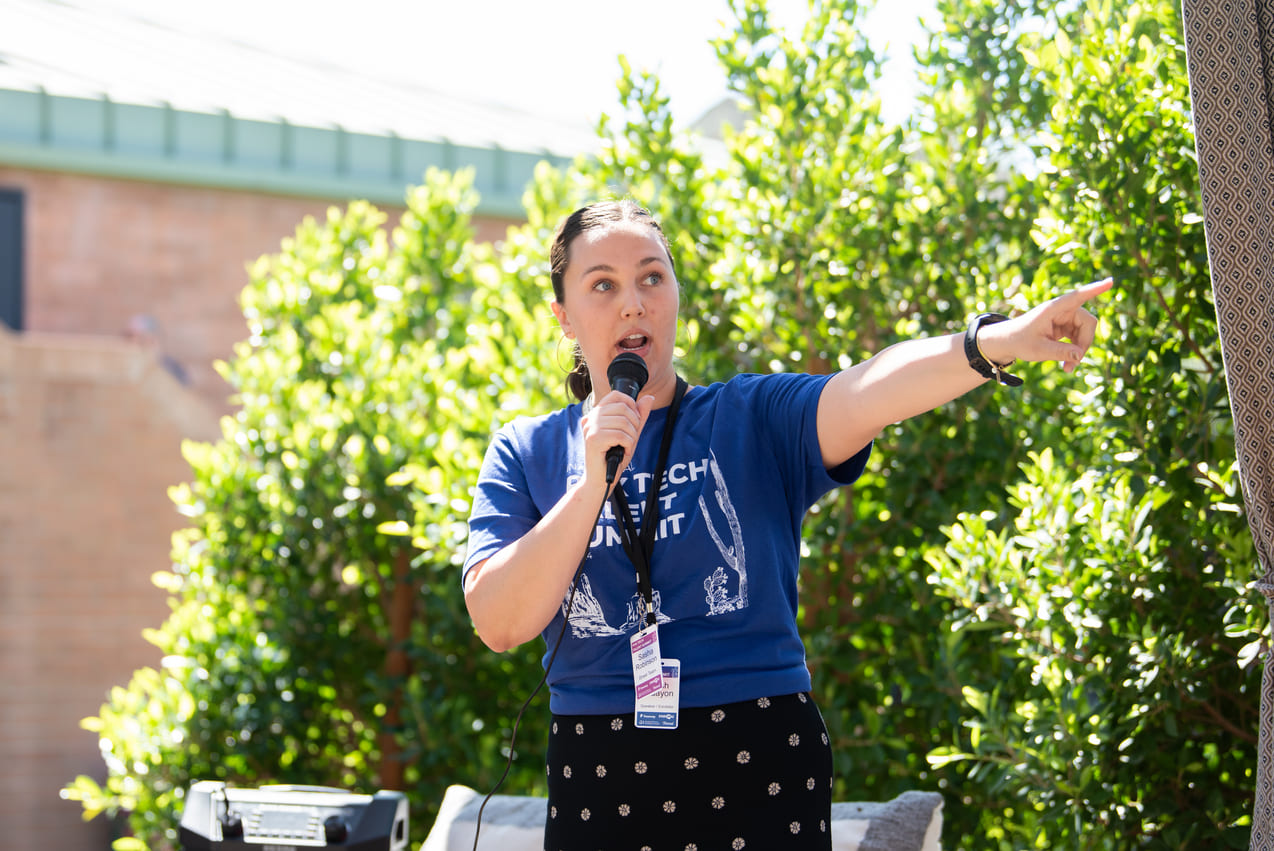
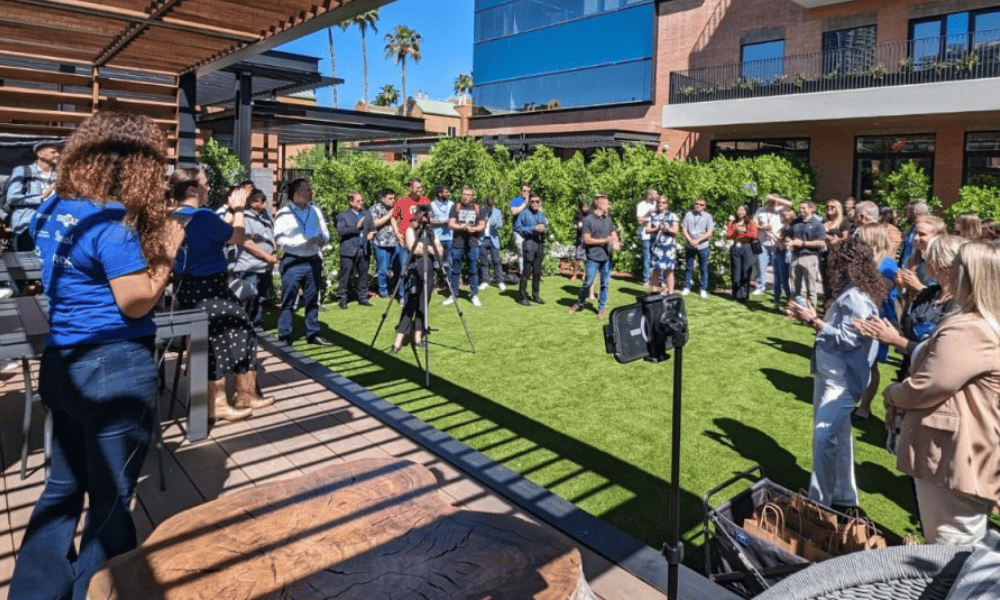
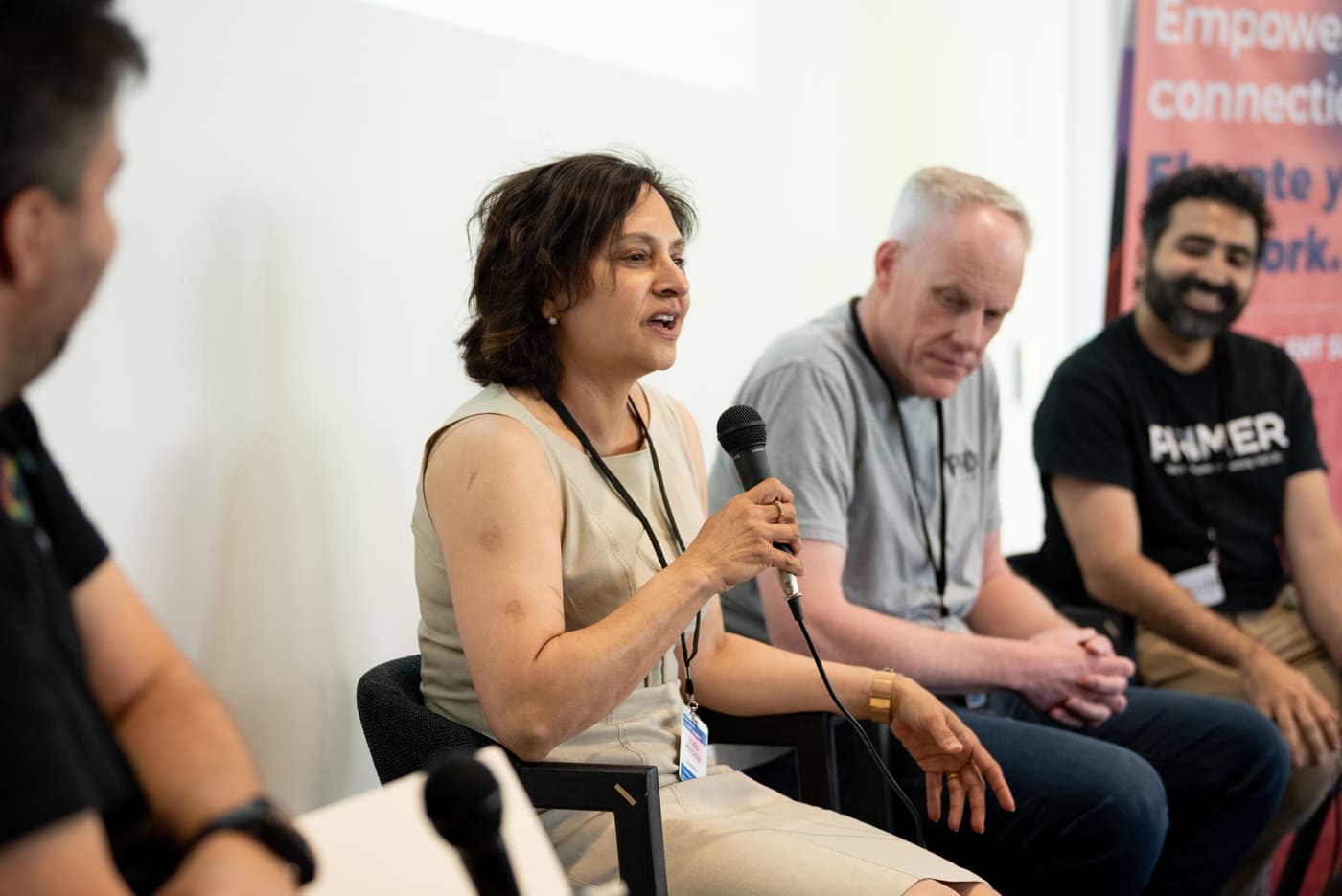
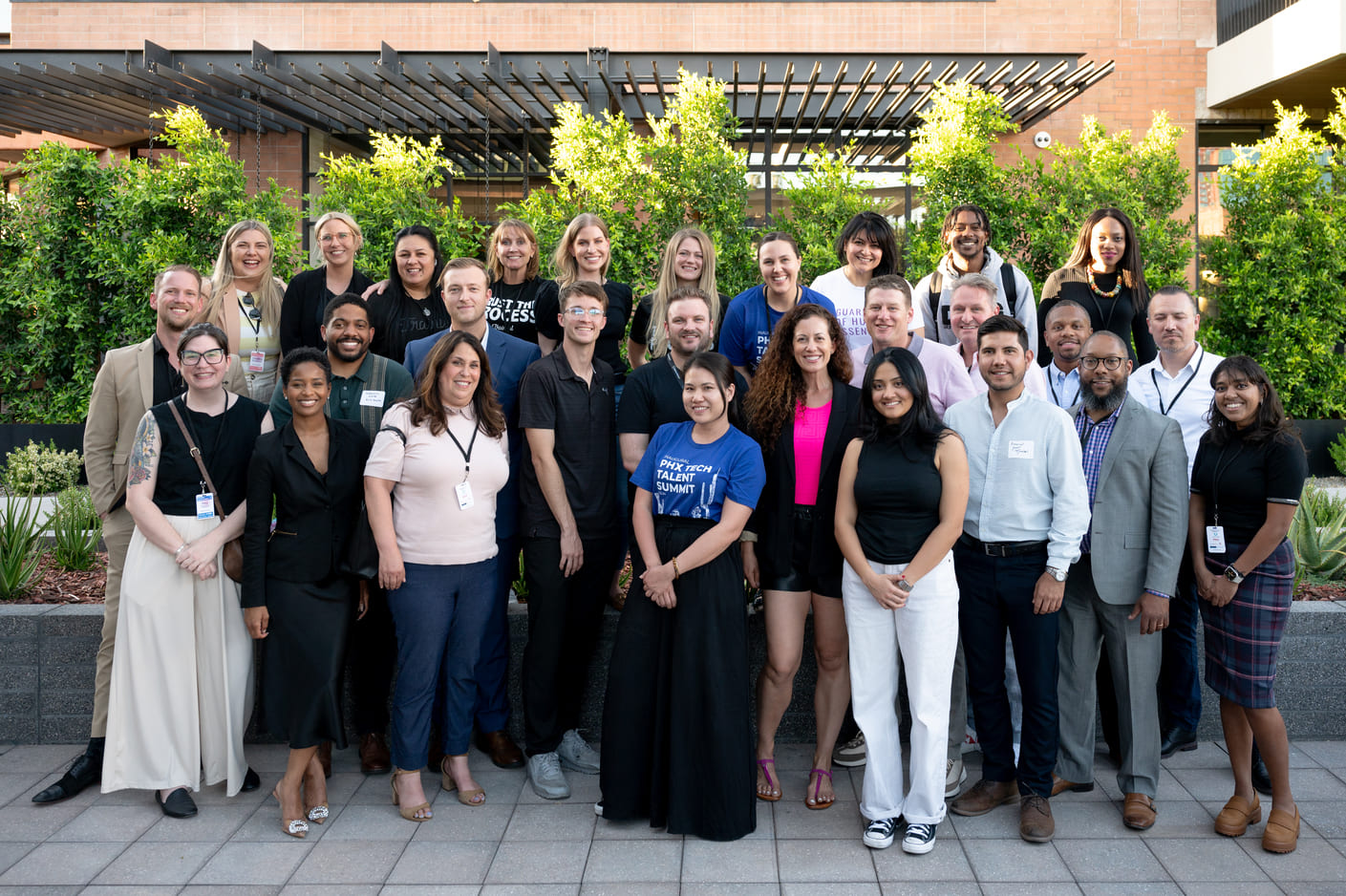
If you want a convening designed around outcomes, not chaos, take a look at Tech Talent Summit. It’s one of the clearest ways to experience how we bring together the people who are hiring, building, investing, and partnering, all in the same room, with enough structure to make it useful.
What are Phoenix tech clusters most known for right now?
Phoenix tech clusters are most visible in semiconductors and advanced manufacturing, with strong momentum in autonomous vehicles, HealthTech and MedTech, fintech infrastructure, and applied AI software.
How is the Phoenix tech ecosystem different from coastal tech hubs?
You’ll notice more industry-integrated building here. A lot of innovation is tied to real deployment in manufacturing, mobility, healthcare, security, and logistics. Less consumer-app noise, more operational problem solving.
Is the Phoenix startup ecosystem only good for big companies?
No. Big anchors create the demand that startups can serve. The key is to position yourself in a real value chain and build relationships with the operators who feel the pain day to day.
What Arizona startup sectors should you watch if you want near-term opportunity?
Semiconductor-adjacent software and automation, AV safety and fleet tooling, digital health and care navigation, fintech enablement, and AI for industrial and clinical workflows are all areas where buyers already have budgets.
What is the fastest way to navigate opportunities without guessing?
Start with a map, then commit to community. Use the Freeway Dashboard to get oriented, then build Trusted Community by returning to a few high-signal spaces until relationships compound.
Silicon Desert is not a branding exercise. It’s the result of real commitments and real overlap across Phoenix tech clusters: semiconductors as an anchor, autonomous vehicles as a proving ground with ongoing operations, HealthTech as a practical market, and a software and AI layer that connects the whole thing.
If you’re a founder, operator, hiring leader, investor, or partner, your edge in Phoenix is simple: better visibility and better relationships. That’s what we build at Freeway. We create the on-ramp into Phoenix’s tech ecosystem, we make opportunity easier to see, and we convene a Trusted Community Where talent meets capital and community.





































.png)


.png)

.png)



Where talent meets capital and community


































.png)